- Develop desktop applications using IDE’s;
- Develop applications with GUI’s using Java Swing;
- Understand file I/O operation in JAVA;
- Write simple database application programs;
- Develop applications using JavaFX;
- Understand creation and usage of Java Bean components;
- Read and create JAR files
Search results: 184
Designed to teach Java programming in the context of building real and working desktop applications.
Course Objectives
- Develop desktop applications using IDE’s;
- Develop applications with GUI’s using Java Swing;
- Understand file I/O operation in JAVA;
- Write simple database application programs;
- Develop applications using JavaFX.

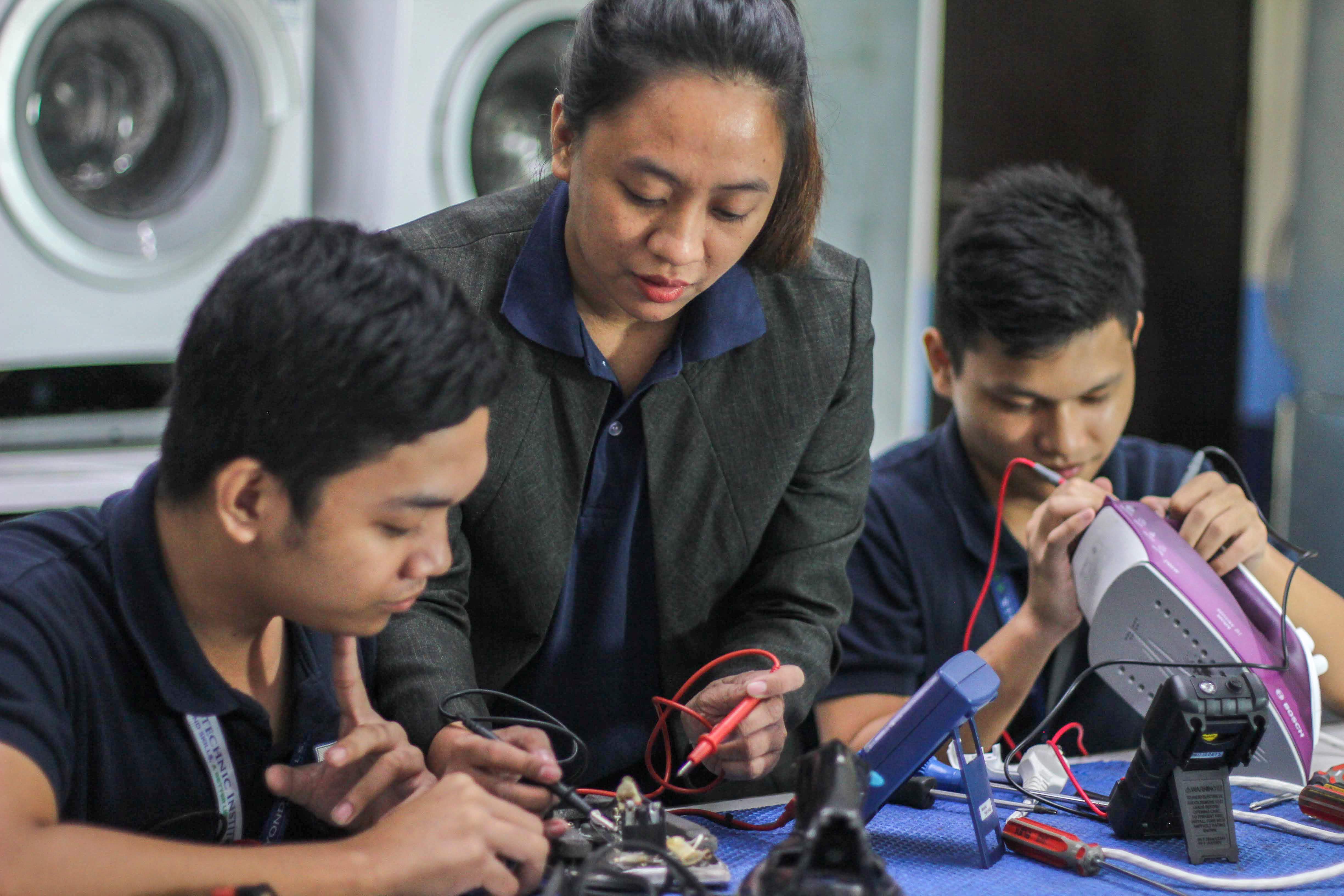
The ELECTRONIC PRODUCTS ASSEMBLY AND SERVICING NC II Qualification consists of competencies that a person must possess to assemble electronic products, prepare printed circuit boards (PCB) modules and to install and service consumer and industrial electronic products and systems.
- Course creator: Laarni Jane Morabe

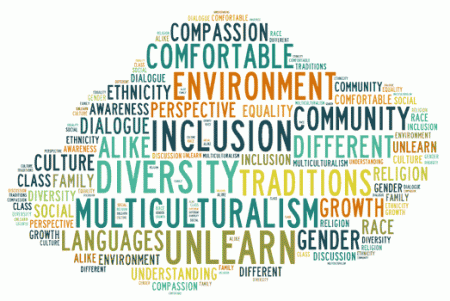
This course uses insights from Anthropology, Political Science, and Sociology to develop students’ awareness of cultural, social and political dynamics, and sensitivity
to cultural diversity; provide them with an understanding of how culture, human agency, society and politics work; and engage them in the examination of the
country’s current human development goals. At the end of the course, students should acquire ideas about human cultures, human agency, society and politics;
recognize cultural relativism and social inclusiveness to overcome prejudices; and develop social and cultural competence to guide their interactions with groups,
communities, networks, and institutions.
- Course creator: Rosh Chrisean Castro

This course deals with the nature of identity, as well as the factors and forces that affect the development and maintenance of personal identity. It is intended to facilitate the exploration of the issues and concerns regarding self and identity to arrive at a better understanding of one's self.
At the end of the course, the students will be able to:
The Self from Various Perspectives
- Discuss the different representations and conceptualizations of the self from various disciplinal perspectives.
- Compare and contrast how the self has been represented across different disciplines and perspectives.
- Examine the different influences, factors, and forces that shape the self.
- Demonstrate critical and reflective thought in analyzing the development of one's self and identity by developing a theory of the self.
Unpacking The Self
- Explore the different aspects of self and identity.
- Demonstrate critical, reflective thought in integrating the various aspects of self and identity.
- Identify the different forces and institutions that impact the development of various aspects of self and identity.
- Examine one's self against the different aspects of self discussed in class.
Managing and Caring for The Self
- Understand the theoretical underpinnings for how to manage and care for different aspects of the self.
- Acquire and hone new skills and learnings for better managing of one's self and behaviors.
- Apply these new skills to one's self and functioning for a better quality of life
- Course creator: Annjenica Umali
- Teacher: Dyana Rose Rivera

This course deals primarily with the study of the moral behavior or conduct of man as viewed from the principles known by human reason. It covers the study of human actions from the point of view of rightness or wrongness based on objective moral norms. It also deals with the formation of values, proper beliefs, and attitudes that predisposes the human person to proper work habits in the pursuit of his or her total development as a person. It aims to help the students develop a “Philosophy of Life” that will give meaning and direction to work and life.
At the end of the course the students should be able to:
- Explain ethics as the practical science of the morality of human conduct as a means for the achievement of ultimate happiness,
- Differentiate human acts from the acts of man and to understand their implications,
- Analyze the aspects that contribute to the voluntariness and moral responsibility of the actions of man,
- Explain the proper fundamental criteria in the judgment of the actions of man and the moral order,
- Realize the obligation of man to form his conscience by studying the norms of morality and conforming his conduct on them,
- Understand the nature of the basic human virtues and develop the will to practice them,
- Explain the basis of the dignity of the human person through his origins, powers, and end,
- Appreciate the role of values and virtues in achieving ultimate happiness,
- Explain the nature of work that provides the philosophical foundation to the rights of a worker.
- Course creator: Annjenica Umali
- Teacher: Ella Mae Senapilo

Course Objectives
At the end of the course the students should be able to:
- Explain ethics as the practical science of the morality of human conduct as a means for the achievement of ultimate happiness,
- Differentiate human acts from the acts of man and to understand their implications,
- Analyze the aspects that contribute to the voluntariness and moral responsibility of the actions of man,
- Explain the proper fundamental criteria in the judgment of the actions of man and the moral order,
- Realize the obligation of man to form his conscience by studying the norms of morality and conforming his conduct on them,
- Understand the nature of the basic human virtues and to develop the will to practice them,
- Explain the basis of the dignity of the human person through his origins, powers, and end,
- Appreciate the role of values and virtues in achieving ultimate happiness,
- Explain the nature of work that provides the philosophical foundation to the rights of a worker.
- Course creator: marinel asia
- Course creator: Julie Anne Laroza
- Teacher: Marinel Asia
- Teacher: Annjenica Umali

This course deals primarily with the study of the moral behavior or conduct of man as viewed from the principles known by human reason. It covers the study of human actions from the point of view of rightness or wrongness based on the objective moral norms. It also deals with the formation of values, proper beliefs and attitudes that predisposes the human person to proper work habits in the pursuit of his or her total development as a person. It aims to help the students develop a “Philosophy of Life” that will give meaning and direction to work and life.
At the end of the course the students should be able to:
- Explain ethics as the practical science of the morality of human conduct as a means for the achievement of ultimate happiness,
- Differentiate human acts from the acts of man and to understand their implications,
- Analyze the aspects that contribute to the voluntariness and moral responsibility of the actions of man,
- Explain the proper fundamental criteria in the judgment of the actions of man and the moral order,
- Realize the obligation of man to form his conscience by studying the norms of morality and conforming his conduct on them,
- Understand the nature of the basic human virtues and to develop the will to practice them,
- Explain the basis of the dignity of the human person through his origins, powers, and end,
- Appreciate the role of values and virtues in achieving ultimate happiness,
- Explain the nature of work that provides the philosophical foundation to the rights of a worker.
- Course creator: Annjenica Umali

This course deals primarily with the study of the moral behavior or conduct of man as viewed from the principles known by human reason. It covers the study of human actions from the point of view of rightness or wrongness based on the objective moral norms. It also deals with the formation of values, proper beliefs and attitudes that predisposes the human person to proper work habits in the pursuit of his or her total development as a person. It aims to help the students develop a “Philosophy of Life” that will give meaning and direction to work and life.
At the end of the course the students should be able to:
- Explain ethics as the practical science of the morality of human conduct as a means for the achievement of ultimate happiness,
- Differentiate human acts from the acts of man and to understand their implications,
- Analyze the aspects that contribute to the voluntariness and moral responsibility of the actions of man,
- Explain the proper fundamental criteria in the judgment of the actions of man and the moral order,
- Realize the obligation of man to form his conscience by studying the norms of morality and conforming his conduct on them,
- Understand the nature of the basic human virtues and to develop the will to practice them,
- Explain the basis of the dignity of the human person through his origins, powers, and end,
- Appreciate the role of values and virtues in achieving ultimate happiness,
- Explain the nature of work that provides the philosophical foundation to the rights of a worker.
- Course creator: Annjenica Umali

This course deals primarily with the study of the moral behavior or conduct of man as viewed from the principles known by human reason. It covers the study of human actions from the point of view of rightness or wrongness based on objective moral norms. It also deals with the formation of values, proper beliefs, and attitudes that predisposes the human person to proper work habits in the pursuit of his or her total development as a person. It aims to help the students develop a “Philosophy of Life” that will give meaning and direction to work and life.
At the end of the course the students should be able to:
- Explain ethics as the practical science of the morality of human conduct as a means for the achievement of ultimate happiness,
- Differentiate human acts from the acts of man and to understand their implications,
- Analyze the aspects that contribute to the voluntariness and moral responsibility of the actions of man,
- Explain the proper fundamental criteria in the judgment of the actions of man and the moral order,
- Realize the obligation of man to form his conscience by studying the norms of morality and conforming his conduct on them,
- Understand the nature of the basic human virtues and develop the will to practice them,
- Explain the basis of the dignity of the human person through his origins, powers, and end,
- Appreciate the role of values and virtues in achieving ultimate happiness,
- Explain the nature of work that provides the philosophical foundation to the rights of a worker.
- Course creator: Annjenica Umali